

 2026-02-24
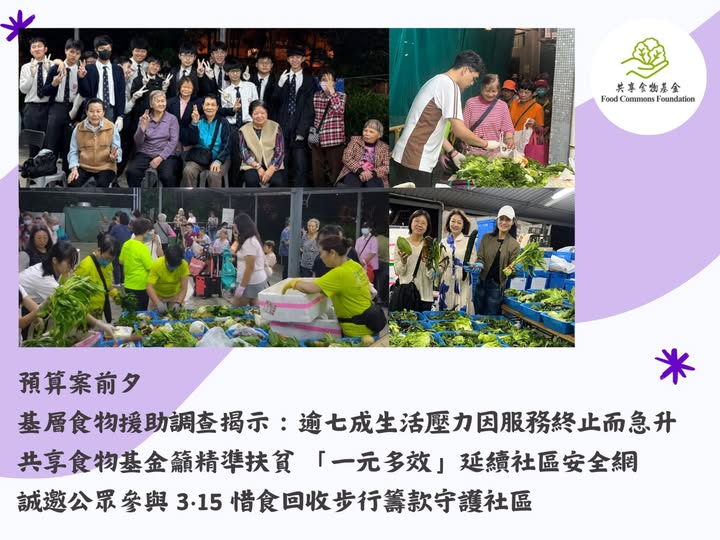
On the eve of the budget, a survey on grassroots food assistance reveals that over 70% of people experience a sharp increase in life stress due to the termination of services.
We cordially invite the public to participate in the 3.15 Food Save Walkathong to raise funds and protect the community.
(Hong Kong, February 24, 2026)Ahead of the release of the new budget, the Food Commons Foundation today released a survey of beneficiaries of the "Sha Tin District Food Recycling and Sharing Scheme." The results reveal that under current public finance pressures, this type of community project perfectly embodies the core value of "targeted poverty alleviation"—achieving multiple benefits from every dollar invested, including alleviating economic burdens, improving grassroots health, strengthening community bonds, and promoting environmental sustainability. The Foundation urges the government to recognize the diverse social benefits of such programs when reviewing resource allocation and to continue supporting community food recycling projects.
The survey was conducted from January 21 to February 3, 2026, interviewing 103 beneficiaries, primarily elderly people aged 60 and above and those from low-income families. The results show that the program successfully transforms limited resources into profound social returns:
I. Precise Focus: A Single Expenditures Creates Multiple Benefits
The survey found that the benefits of the program far exceeded simple food assistance:
- Economic Empowerment: Over half (50.5%) of surveyed households saved more than HK$500 per month on food expenses, with 13.6% saving over HK$1,000. This "lifesaving money" could be reinvested in medication, children's education and daily necessities, and even allow families to occasionally enjoy tea or buy new clothes, effectively alleviating family financial pressure and restoring their quality of life. One person said, "The money we saved was used to buy Ocean Park tickets a few months later; my whole family hasn't been this happy in a long time."
- Improved Health: Over 90% (93.2%) of respondents said that the program increased their intake of fresh fruits and vegetables, helping them cope with high prices and improve their nutritional intake. Nearly half (45.6%) believed that their intake of fresh fruits and vegetables "significantly increased," reflecting that the program can sustainably improve nutritional balance and the health of the elderly. Beneficiaries generally stated that due to high prices, it was difficult to buy fresh fruits and vegetables on a regular basis, and the program allowed them to "eat healthily" and "try foods they couldn't afford normally."
- Community Connection: All respondents reported feeling cared for and respected during the food distribution process, with nearly 60% (57.3%) experiencing this "frequently." The program aims to become a community platform that conveys warmth and dignity. One elderly person shared, "The volunteers are very friendly, and I feel very warm every time I receive food." Another elderly person who cares for their sick mother wrote, "Although my mother has lost her ability to take care of herself, the opportunity to receive food makes me feel that I can still contribute to my family." These touching stories highlight that the program not only addresses hunger but also conveys dignity and hope.
II. Communities' High Dependence: Discontinuation of Assistance Could Increase Social Pressure
The survey also clearly shows that such programs have become an indispensable safety net for communities. When asked about the impact on their life stress if services were interrupted due to funding issues, nearly 70% (68.9%) of respondents gave a high stress rating of 7 or above. This strongly reflects the deep dependence of communities on these services; if interrupted due to policy shifts, the hundreds of dollars saved would immediately translate into enormous life stress, even affecting the health of the elderly and family harmony.
The Food Commons Foundation's Appeal: Strengthening Community Resilience Through Targeted Investment
The Food Commons Foundation Project Manager Carol Kwok stated, "In times of fiscal constraints, the government should ensure that every resource is used effectively. Programs like 'Food Commons @ Sha Tin' are exemplary of 'targeted poverty alleviation'—they are not simply about distribution but about organically combining environmental protection, poverty alleviation, and community care through food recycling. Every dollar saved by citizens ultimately flows back into the local community economy; every bit of warmth felt by the recipients strengthens social trust and resilience."
Carol Kwok pointed out that the fund and its predecessor projects have operated on a "collect and distribute within the district" model since 2009, recycling over 11,373 metric tons of food to date, benefiting over 10.07 million people. However, due to the government's shift towards large-scale food waste treatment facilities, funding for related market recycling projects is facing termination. At this crucial moment when the budget is announced, the fund hopes that the authorities can take a "multi-pronged approach" to recognize the comprehensive value of the project and continue and optimize the funding mechanism so that this community safety net, which can both save money and create diverse benefits, can continue.
She emphasized that every dollar donated can be converted into approximately $6.50 worth of fresh, nutritious food, making it extremely effective. To continue its mission of saving food and helping people, the Food Commons Foundation will hold a "Step by Step • Food Save Walkathong" on Sunday, March 15, 2026, from 2:15 PM to 4:30 PM, inviting citizens, families, schools, and businesses to participate and take action to protect the community, expressing their support for livelihood assistance and sustainable communities through their footsteps.
[Event Details]
Route: Shatin Women’s Association → Che Kung Temple → Tai Wai Market → The Wai → Return to Shatin Women’s Association (approx. 45 minutes walking)
[Event Highlights]
Walkathon Fundraising: Guided by experienced volunteers, participants will learn how Food Commons rescues edible food and supports the community.
Tea Gathering: Taste homemade snacks prepared by beneficiary elderly and hear their stories about how food recovery programs improve their lives.
Distribution Experience: Become a Food Saver by joining food distribution on-site, , understanding grassroots needs
[Participation Packages]
Individual / Family : $300 per person
Schools: $4000-$10,000 (Includes experiential activities)
Corporate / Organization:$8,000-$28,000 (Includes experiential activities)
Registration Deadline: March 3, 2026
Registration and Donation: https://shorturl.at/pLkNI
Carol Kwok, project manager of the Food Commons Foundation, said, "The survey results clearly show that food rescue services not only provide sustenance, but are also a source of health, dignity, and community connection. We sincerely invite citizens to join us in safeguarding public services, understanding the importance of cherishing food, helping to maintain this safety net that protects the vulnerable, and ensuring the continuation of this community-value service."
Summary of the voice of the beneficiaries of Eat Enjoy Shatin
Economic Stress Relief:
"The money saved can be used to see a doctor."
"The money I saved took it to my grandchildren to buy study books."
"The whole family is very happy with the money saved for tea."
"The money saved can buy Ocean Park tickets in a few months. We can go and have fun together. It's fun!"
Health Improvement:
"Eat healthy."
"Due to the pressure of life, I rarely buy fruit. Once I received fresh oranges and apples, my family had a great time eating them."
"Able to try some uneaten foods like yogurt, cheese, chocolate chips, and the good ones will be repurchased at the supermarket."
Community Care:
"The volunteers were friendly in distributing the food and felt warm when receiving it."
"Every time I receive food, I feel very warm. It not only saves money, but also makes me feel happy."
"Every time I receive fruits and vegetables to share with my family, I feel warm and the whole family enjoys eating."
Quality of Life:
"The money saved can buy clothes and improve the quality of life."
"Being able to buy items that families need to reduce the stress of life."
"The most anticipated moment of receiving food every day is that we no longer have to worry about three meals a day. The whole family is happy because of it!"
Thanksgiving:
"Thank you for your kindness in making us feel respected."
"If I have the ability in the future, I will also offer my love and continue this meaningful thing."
"Good people are rewarded! Thank you very much for the donations of kind people."
"You are really admirable for this kind-hearted person! I wish you peace, health and happiness for generations to come!"